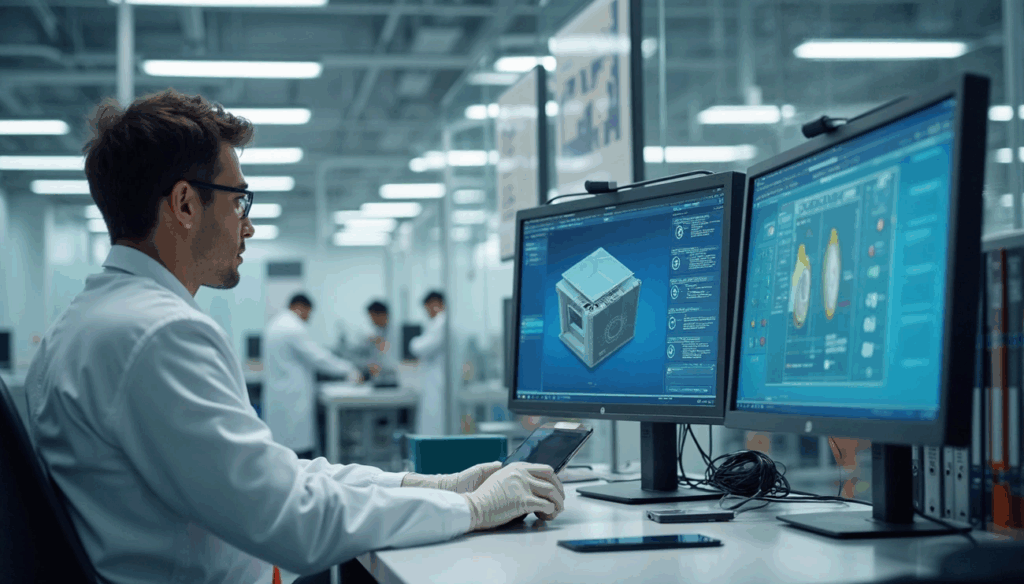
ERP Quality Management: The Complete Guide to Moving Beyond Paper Forms
Replace paper workflows with digital ERP quality management. Learn how integrating quality data with production improves traceability and cuts errors by 50%.
Welcome to our blog, which we’ve thoughtfully named, “Expand On It.” It’s here where we’ll expand on a broad range of topics—ranging from technology to industry. Since we’ve been automating the business processes of highly regulated discrete manufacturing companies for the past several decades, we think we’ve learned a thing or two—and we’re happy to share it with you.
Replace paper workflows with digital ERP quality management. Learn how integrating quality data with production improves traceability and cuts errors by 50%.
ERP quality management systems streamline CAPA workflows, automate compliance, and connect quality data to operations—reducing costs and accelerating root cause resolution.
Drive higher margins, cut scrap and downtime, and turn ERP quality management into a profit engine—not just a compliance checkbox—with real-time monitoring, and end-to-end traceability for manufacturing leaders.
Upgrade your medical device ERP to drive growth. Learn how modern systems offer 89% better data accuracy, 47% faster development, and seamless compliance.
Sales tax has moved beyond simple math into a high-risk manual burden. In 2023 alone, there were nearly 86,000 taxability updates across North America. Tracking these changes manually is no longer a viable business strategy.
The policy environment shaping U.S. manufacturing—and today’s competitive landscape with China—is extremely complex. On March 19, 2026, fresh from a visit to China, Bruce Graham, investor, advisor, and board member, shared firsthand insights and real-world examples of how innovation is helping American manufacturers gain an edge and turn advanced technology into a competitive advantage.
Discover how medical device ERP systems with integrated lot traceability streamline recall management and ensure FDA compliance. Expert insights for manufacturers.
Meet FDA 21 CFR Part 820 requirements with medical device ERP systems. Complete traceability from raw materials to patient delivery prevents costly recalls.
Is a medical device ERP worth the cost? Learn how the right system reduces material waste by 60%, speeds up production 1.5x, and lowers operational costs by 22%. Explore total cost of ownership, compliance automation savings, and how to achieve ROI in 18–36 months.
“Your MRP is a piece of junk.” I’ve heard it a thousand times, but the problem is rarely the math—it’s the data. Discover the three critical elements that make or break your planning system and why running “imperfect” MRP is actually the best way to finally make it tell the truth.
Implementing a medical device ERP system can be complex and expensive without proper planning. This article outlines the 7 most common pitfalls medical device manufacturers face—from regulatory compliance challenges to data migration, change management, and supply chain traceability. Learn actionable tips to avoid costly errors and successfully deploy an ERP system that supports your quality, operational, and regulatory goals.
Leading medical device companies reveal how ERP systems delivered measurable results: 14% faster delivery times, improved compliance management, and seamless scaling. Real case studies with actionable insights.
Medical device manufacturers are discovering how AI and IoT integration in their ERP systems can deliver remarkable operational improvements. Modern medical device ERP systems now provide 25-30% time savings in processing tasks while improving decision accuracy by up to 60%. This comprehensive guide explores how predictive analytics, real-time monitoring, and automated compliance tracking are revolutionizing manufacturing operations in an industry where precision and regulatory compliance are paramount.
Legacy medical device ERP systems cost healthcare providers $25 billion annually through manual processes and disconnected data systems. Organizations using outdated platforms report 30-40% higher administrative overhead, while poor data quality alone costs an average of $12.9 million per year.
Medical device manufacturers face an increasingly complex regulatory landscape where compliance failures can result in costly sanctions and delayed product launches.
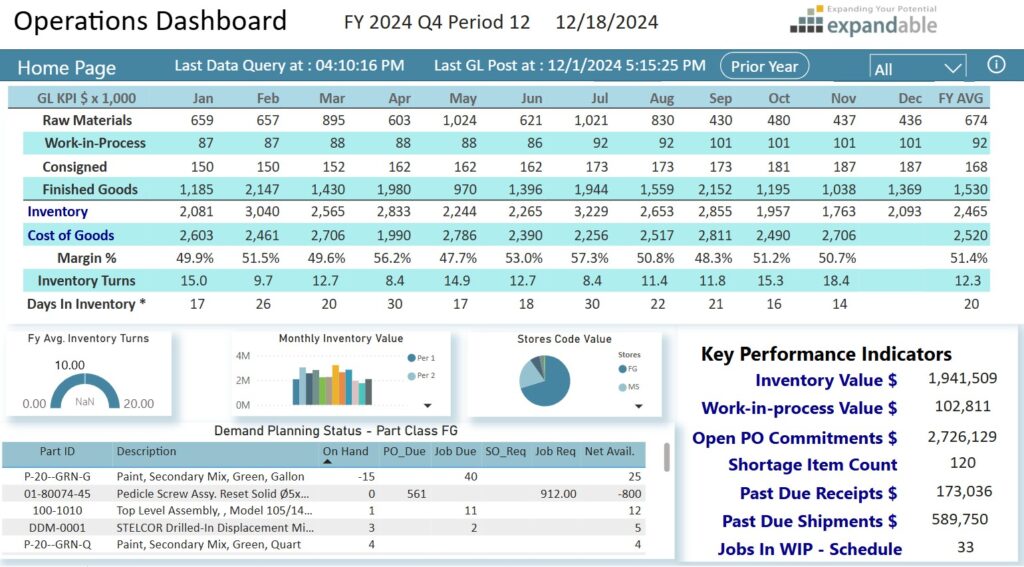
Explore ERP dashboards and KPI reports shared by manufacturing leaders. Learn about Key Performance Drivers (KPDs) and data synthesis in this Sip Club recap.
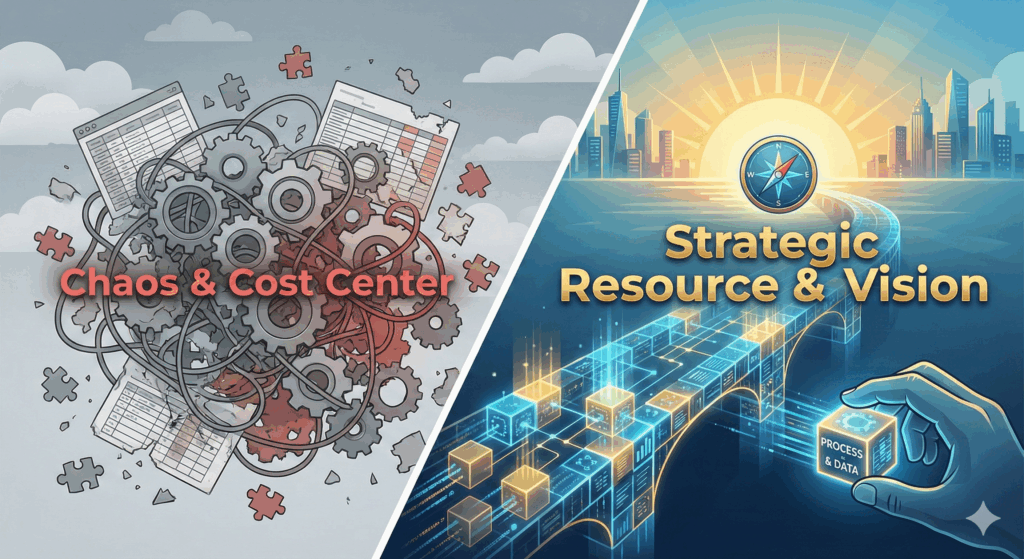
Is your ERP a strategic asset or just a cost center? Join the Sunrise Sip Club as we explore how to enforce effective processes, clean up data, and drive real business value—brick by brick. Featuring insights from industry experts Peter Adams and Jeff Osorio on overcoming common implementation hurdles.
Growing companies face constant pressure to move fast while staying grounded in reality. The leaders who thrive are the ones who plan continuously, empower strong teams, and make decisions based on forward-looking insight—not instinct.
Manufacturers often debate MES vs. ERP, but the real power comes from integrating both. In this blog, Ryan Sorensen shares how MES enhances ERP accuracy, boosts visibility, improves costing, and drives smarter production. Learn the benefits, challenges, and best practices for successful MES-ERP integration.
Ranked and compared: the 12 best medical device ERP systems for FDA 21 CFR Part 11 and ISO 13485 compliance, UDI and device history records, end-to-end traceability, CAPA/quality, and real-time visibility. We break down features, pros/cons, pricing ranges, and best-fit recommendations for startups, mid-market, and global manufacturers—so you can cut recall risk, meet regulatory demands, and scale with confidence.
This post discusses the topic of Sales & Operations Planning, including the definition of S&OP; why it’s critical for manufacturers today; how to ensure cross-functional alignment and success; common S&OP mistakes; and how to avoid them.
This post covers insights on the state of AI in manufacturing; the difference between robotic process automation and AI; how manufacturers are using AI today; and what manufacturers should be doing about AI right now.
The numbers tell the story. Companies implementing specialized manufacturing ERP software report 14% faster product delivery times and 10% more orders delivered on schedule. These systems also deliver …
The U.S. healthcare ERP market reached USD 1.81 billion in 2023 and projects growth to approximately USD 3.19 million by 2033, at a CAGR of 5.84% from 2024 …
The statistics tell a stark story: 67% of medical device manufacturers struggle without specialized ERP systems designed for their industry-specific needs. This failure rate reflects the unique operational …
Medical device manufacturers face strict challenges with ISO 13485 software validation. The standard includes at least 8 clauses with specific validation requirements. Quality software validation plays a crucial …

Product recalls cost companies around $10 million in direct expenses alone. For manufacturers, this financial reality makes lot tracking software more than just a compliance tool—it’s become essential protection against …
The medical device industry is heading toward $800 billion by the end of this decade. But here’s what that growth means for manufacturers: medical device companies typically maintain …
Most manufacturers implement serial number tracking because they have to. Regulatory requirements drive the decision, compliance boxes get checked, and the project moves forward. What they don’t realize is the …
On Thursday, May 15th, 2025, the Sip Club, hosted by Expandable Software, MIE Solutions, and Mirador Software Group, was pleased to welcome nearly 70 attendees from across the manufacturing …
On Thursday, April 17, 2025, the Sunrise Sip Club, hosted by Expandable Software and Mirador Software Group, was pleased to welcome Peter Adams, Vice President of Business Strategy …
On Thursday, March 20, 2025, the Sunrise Sip Club, hosted by Expandable Software and Mirador Software Group, invited its regular facilitator, Jeff Osorio, Consulting CFO at Engine Room, …
The first session of the Sunrise Sip Club, sponsored by Expandable Software and Mirador Software Group, convened on May 16, 2024 with Mr. Rick Koski, Vice President of Enterprise …
It is imperative that an adequate number of key personnel from all impacted functions be assigned to the core implementation project team.
The true elegance and simplicity of standard costing enables management by exception as opposed to managing the entirety.
Simply “getting by” should not be acceptable for any company trying to grow and realize more profits in the long run.

Asking the right questions to the references an ERP software vendor provides can either validate your thoughts or open your eyes.

It’s important to perform the same level of due diligence in checking references that was achieved in examining the product.
When used properly CRM is a very powerful tool. Unfortunately, CRM deployment success rates are discouraging to say the least.
A significant benefit that is often overlooked in the decision to license a CRM system is the care and feeding of the installed base.
Backflushing automates the issuing of material to the manufacturing floor upon the completion of the production process.
Automatic notifications from your ERP system can be the cure to nightly tossing and turning when the cause is concern over work related issues.
A culture of “Accountability with Consequences” must be created and backed by direct communication from company leaders.
The number one objective for any ERP demo is to determine if the functionality that you require exists and can be demonstrated.
Wouldn’t it be nice if there was one managerial style that you can use for your staff as well as your supervisor? Well, there is!
While there is no hard and fast rule on what is acceptable or required, most companies categorize their inventory into three classifications.
Use these recommendations to make sure your ERP implementation is well thought-out and delivers greater productivity and cost savings.
A Georgia Tech study determines that accurate lead times in MRP can save money by reducing unnecessary on-hand inventory.
Lean manufacturing using a Kanban system can reduce inventory levels, expose production floor inefficiencies and reduce waste.
The value of presenting properly cannot be understated. This is your chance to be viewed as a significant value added member of the team and demonstrate your level …
A CFO in a start-up bears the added burden of maintaining a solid working knowledge of HR and legal in order to satisfy their responsibilities.
Tasks is the industry standard term for activities assigned to a CRM user, and is one of the fundamental features of a CRM system.
A key step in CRM deployment carefully defines sales process steps so information can be interpreted as accurately as possible.
At the end of the year, adding up all the “little” costs associated with inventory mistakes can have a substantial effect on the bottom line.
The most significant benefit of an ERP implementation is uniting the enterprise under a single data repository.
What are the most up to date trends in Life Science companies, and what operational and financial challenges are they facing? On Thursday, February 20, 2025, The Sunrise …
How can manufacturers improve Product Management strategies and explore new market opportunities with PIM (Product Information Management) and e-Commerce tools? On Thursday, January 16, 2025, The Sunrise Sip …
One of the big questions in any business involved in selling goods is (or at least should be) “How much does it cost?” Even the hot dog vendor outside the …
I often tell Clients “Manufacturing is simple: you buy stuff, you put stuff together and you ship stuff.” Often, their response to this is “We’re different” – mostly based on the complexity …
The second session of the Sunrise Sip Club, sponsored by Expandable Software and Mirador Software Group, convened on June 20th, 2024, focusing on Key Performance Indicators (KPI’s). Why do we Measure? …